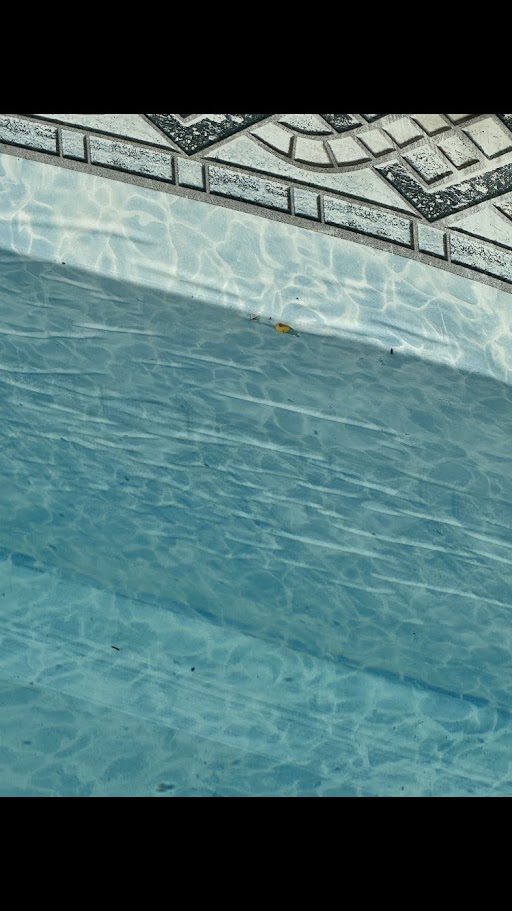
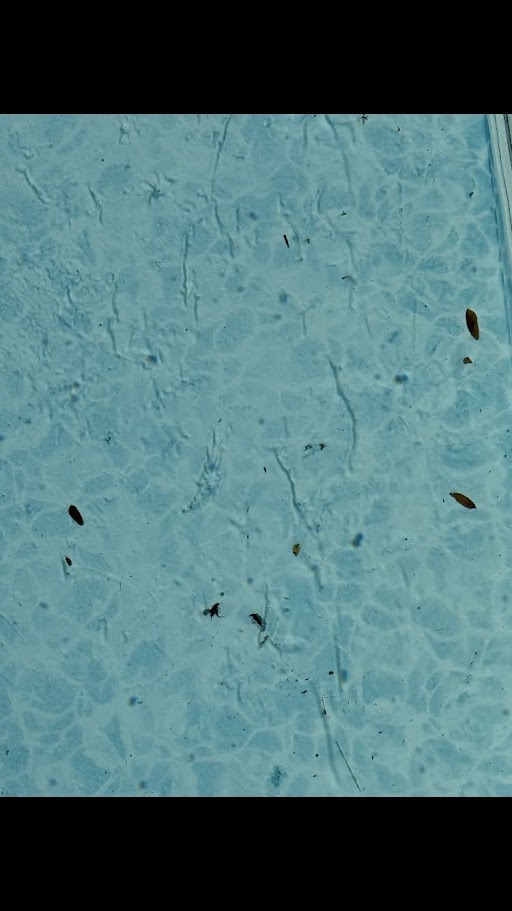
When a homeowner says I have wrinkles in my pool – we often ask the question are the wrinkles just on the floor, or are they on other areas of the pool as well. The next question is do the wrinkles look like spaghetti, all directions and kind of squiggly? If the answer is yes to one or both, we’re likely looking at pH Wrinkles.
pH wrinkles occur when low pool pH causes a vinyl liner to absorb excess water, expand, and stretch, creating puckers, creases, or ripples across the liner’s surface.
Unlike localized wrinkles (often caused by groundwater pushing underneath), chemical wrinkles typically spread uniformly across the entire pool surface.
Causes of pH Wrinkles
- Water Absorption & Swelling When pool water becomes chronically acidic (low pH, typically below 7.0), the vinyl matrix absorbs water molecules, forcing the material to swell. Because the liner has nowhere to expand, it puckers and forms fixed wrinkles.
- Loss of Plasticizers Low pH strips away the plasticizing oils that keep vinyl flexible, making the liner brittle and causing permanent distortion over time.
- Compounding Chemical Imbalances Low Total Alkalinity makes pH prone to drastic “pH bounces,” while excessively high chlorine or cyanuric acid (CYA) levels worsen vinyl degradation and accelerate wrinkling.
Note: Once a liner has absorbed water and stretched due to low pH, the wrinkles generally become permanent and cannot be smoothed out simply by rebalancing the water.
How to Prevent pH Wrinkles
- Maintain Ideal Water Chemistry Parameters:
- pH: Keep between 7.4 and 7.6 (never let it drop below 7.2).
- Total Alkalinity: Maintain between 80 and 120 ppm to buffer against sudden pH drops.
- Free Chlorine: Keep at safe operational levels (1.0–3.0 ppm); avoid letting chlorine sit at high levels for extended periods.
- Test Water Frequently: Test your pH and chlorine levels at least 2–3 times per week using a reliable test kit or strip.
- Pre-Dilute Pool Chemicals: Always dilute dry acid (sodium bisulfate) or broadcast liquid chemicals (muriatic acid) properly around the perimeter while the pump is running to prevent acidic pockets from sinking to the floor.
- Venting Covered Pools: If using an automatic or solar cover, off-gas chemical fumes periodically. Trapped acidic fumes under a cover degrade vinyl quickly.
Once pH wrinkles (chemical wrinkles) form in a vinyl pool liner, replacement is usually the only permanent solution, but whether you need to replace it immediately depends on the extent of the damage.
Here is what you need to know about your options and next steps:
Why pH Wrinkles Are Hard to Fix
When vinyl is exposed to acidic water (low pH), it absorbs water molecules, expands, and permanently stretches. Because the vinyl has expanded beyond its original size, there is physically “too much material” for the pool space, making it impossible to smooth out completely without cutting or distorting the liner further.
Your Options
- Leave It As-Is (If the Liner Is Intact)
- When to do this: If the wrinkles are purely cosmetic, the liner is still pliable, and there are no tears or leaks.
- What to expect: The wrinkles will remain permanently, but the pool can still function normally. Keep in mind that raised ridges can make manual vacuuming or automatic pool cleaners more prone to getting stuck or wearing down the high points on the vinyl faster over time.
- Full Liner Replacement (Permanent Fix)
- When to do this: If the wrinkles are severe, brittle, cracking, leaking, or making pool maintenance difficult.
- Why it’s necessary: Once vinyl stretches and loses its essential plasticizers from low pH exposure, it cannot return to its original shape or elasticity.
- Temporary/Minor Adjustments (Limited Success)
- Plunger / Suction Method: In very mild cases, using a clean plunger or a suction tool to gently tug vinyl back toward the walls can sometimes soften the appearance, but this rarely works for true pH-induced stretching.
- Draining and Resetting: Not recommended. Draining a pool with an aged or chemical-damaged liner often causes it to shrink, pull away from the walls, or tear completely when refilled.
Immediate Action Steps
- Balance Your Water Immediately: Bring the pH into the 7.4–7.6 range and Total Alkalinity to 80–120 ppm to stop further vinyl degradation and prevent additional swelling.
- Inspect for Stress Cracks: Check along the folds of the wrinkles to ensure the vinyl hasn’t grown brittle or started cracking.
- Adjust Pool Cleaners: Raise the wheel height on automatic cleaners or switch to gentle brush attachments so they don’t snag or tear the raised ridges.